ATTENTION: PRE SCHOOL & CHildcare Directors!
If an Incident Happened at your facility
Would Your CCTV System Capture or Retain the Footage?
Most preschool systems FAIL when they’re actually needed — due to blind spots, poor placement, and retention issues.

Here’s why most preschool CCTV systems fail:
Cameras are offline, disconnected, or not recording when needed
Footage is overwritten before anyone checks it
Problems aren’t discovered until after an incident
And when yours FAILS… it becomes YOUR problem immediately.
Trusted by Childcare Centers Across Central Alabama
From single-location preschools to multi-site facilities
Trusted by Childcare Centers Across Central Alabama
From single-location preschools to multi-site facilities
Trusted by Childcare Centers Across Central Alabama
From single-location preschools to multi-site facilities



Why Many Preschool CCTV Systems Fall Short
We’ve all seen it before.
Something happens — and there’s no coverage where it matters most.
An incident on the playground.
A question about something in a classroom.
Something happens in a hallway — and the camera angle misses it.
Or the footage isn’t clear. Or it’s already gone.
Not because anyone intended for it to fail, but because the system was never designed for how a preschool actually operates.
Most systems are quoted quickly and installed efficiently.
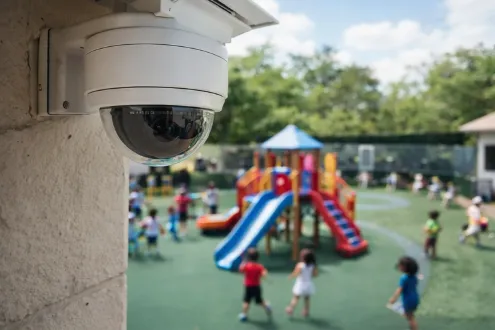
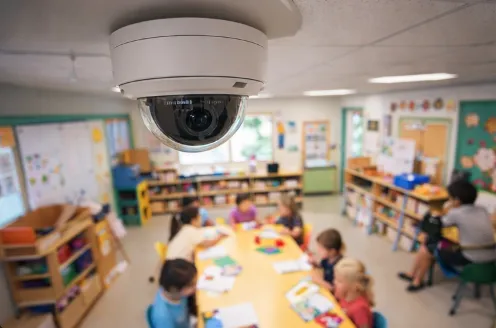
But they’re not designed around:
Classroom layout
Playground visibility
Parent pickup flow
Staff supervision zones
Long-term footage retention
And over time, those small gaps turn into real problems.
We approach it differently.
Every system begins with coverage planning, visibility mapping, and infrastructure design — before a single camera is installed.
The goal isn’t just CCTV.
It’s making sure that when something needs to be reviewed — the footage is there, clear, and complete.
The goal isn’t just CCTV.
It’s making sure that when something needs to be reviewed — the footage is there, clear, and complete.
10+ Early Education Facilities Engineered, Deployed, and Remotely Activated
Thousands of CCTV Systems Engineered, Configured, and Deployed
Commercial-Grade Equipment, NDAA-Authorized CCTV Equipment, and Professional Grade Networking

Hi, I'm Will!
I’m a commercial CCTV engineer with over a decade of experience designing and deploying surveillance systems across commercial environments.
I’ve engineered and installed thousands of cameras — and I’ve also seen what happens when systems aren’t designed properly.
Most CCTV systems don’t fail during installation.
They fail later — when someone actually needs to review footage.
That’s where blind spots show up. That’s where footage is missing. That’s where systems don’t hold up when it matters.
Early education facilities require more than basic camera placement. They require thoughtful coverage planning, proper retention configuration, and systems designed around how the facility actually operates day-to-day.
That’s how I approach every preschool deployment.
Not as a quick install — but as structured infrastructure built for safety, accountability, and long-term reliability.
Most directors aren’t looking for the cheapest option.
They’re looking for certainty.
My role is to make sure when something needs to be reviewed — the footage is there, clear, and complete.
Find Out Why Your CCTV System Could Be Failing!
Takes less than 60 seconds. No obligation.
If something happens — you might not get a second chance to capture it.
Our Structured Review Process
Here’s exactly what happens when you request a system review:
1
Facility & System Review
We start by understanding how your facility actually operates.
Classrooms, hallways, entry and pickup flow, playground coverage, and administrative areas.
If a system is already in place, we review camera placement, storage, retention, and remote access.
2
Coverage & Retention Analysis
We identify blind spots, coverage gaps, and storage limitations that could affect footage when it’s needed.
Most of these issues aren’t obvious — until they’re pointed out.
3
Engineered Recommendations
Based on what we find, we outline a clear approach tailored to your facility.
Camera placement, retention planning, and system structure — all aligned with how your preschool operates.
4
Clear Next Steps
If improvements are needed, you’ll know exactly what they are and how to move forward.
No pressure. No confusion.
Just a clear understanding of your system.
What to Expect
When you request a preschool security review, here’s how we approach it.
Facility & System Review
Classrooms, hallways, entry points, playground coverage, and any existing system.
We identify anything that could cause issues later.
Blind spots, missed angles, or storage limitations that might affect footage when it’s needed.
If there are gaps, we’ll show you exactly where they are.
And what it would take to correct them.
No pressure. No obligation.
Just a clear understanding of whether your current system is doing what it should.
Don’t Find Out Your System Failed
Before or After an Incident.
If something happens in your facility, your system should already be ready.
This review will show you if your system is ready — or if there are issues that you don’t see yet.
Find Out Why Your CCTV System Could Be Failing!
We’ll review your current system and identify coverage gaps, recording issues, or connectivity issues. No obligation.
Copyright © 2026 by CCTV SEQURE 360. All rights reserved.